
Unlocking Multilingual Digital Communication with PolyglotBot - Demo
Streamlined Interactions via API Gateway
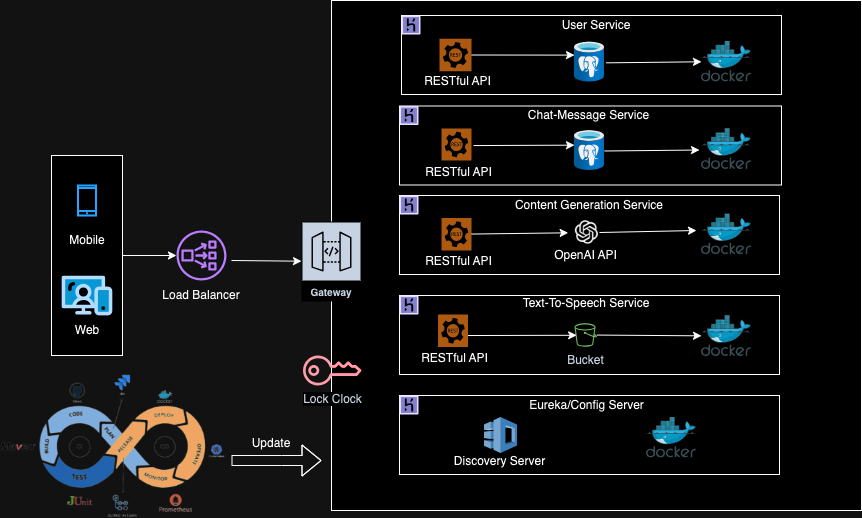
Central to PolyglotBot’s architecture is the API Gateway, which serves as the primary ingress point for all client requests. It efficiently routes these requests to the appropriate microservices while managing essential tasks such as authentication, SSL termination, and rate limiting. This setup not only simplifies client interactions but also enhances the security and reliability of the entire platform.
Advanced Observability with Zipkin
In complex distributed systems like PolyglotBot, maintaining visibility into system performance is crucial. Zipkin, a distributed tracing system, is integrated to monitor and troubleshoot latency issues across the service architecture. By tracking the journey and time of data across services, Zipkin provides invaluable insights into system performance, helping ensure optimal operation even under demanding conditions.
Ensuring Robustness with Resilience4j
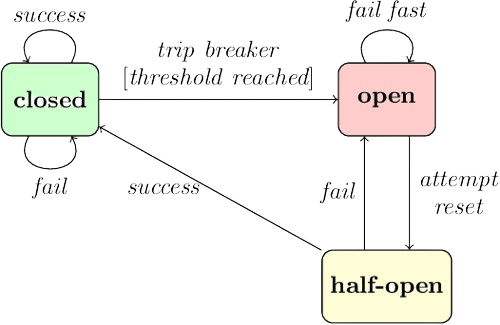
To enhance the system’s reliability, PolyglotBot incorporates Resilience4j, a lightweight, easy-to-use fault tolerance library built for Java8 and functional programming. Resilience4j provides several key mechanisms, including a circuit breaker, which prevents a cascade of failures when a part of the system goes down. By maintaining service operation during partial outages, PolyglotBot ensures a consistent and reliable user experience.
Efficient Messaging with Kafka
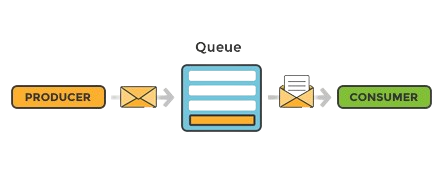
Communication between PolyglotBot’s services is handled by Kafka, a powerful distributed event streaming platform that efficiently manages message queues. Kafka excels in scenarios requiring high throughput, scalability, and reliability. It allows PolyglotBot’s microservices to exchange data seamlessly and maintain their decoupled nature, leading to improved system resilience and scalability.